Health and Safety Policy — Commercial Waste Coney Hall
Policy statement
Commercial Waste Coney Hall maintains a clear and practical commitment to the health, safety and welfare of all employees, contractors and members of the public affected by our commercial waste and rubbish collection service. This policy sets out responsibilities, procedures and expectations for safe operation across our waste management activities. We recognise that safe, reliable commercial rubbish services depend on consistent risk control, effective training and ongoing monitoring.
Scope and applicability
The policy applies to all commercial waste services provided by the organisation, including skip hire, bin collection, waste transfer and on-site commercial rubbish removal. It covers operational staff, drivers, vehicle maintenance teams, contractors and temporary workers. The principles here are designed to be relevant across our service area without referencing local legal variations; compliance with applicable legislation and standards remains mandatory and is managed through our internal compliance process.Key responsibilities
Management holds ultimate responsibility for ensuring that sufficient resources, training and supervision are available. Supervisors and team leaders are responsible for day-to-day enforcement of safe working practices. Employees and contractors must follow safe systems of work, report hazards, and use provided personal protective equipment. All staff will be expected to demonstrate competence in their assigned tasks and to participate in safety briefings.To support safe operations we maintain documented procedures for:
- Vehicle safety — daily checks, load security and safe driving standards;
- Manual handling — correct lifting techniques and use of handling aids;
- Segregation of waste streams — clear marking and handling of recyclables, general waste and controlled wastes.
Training and competence
All staff will receive role-specific induction and refresher training at scheduled intervals. Training covers safe use of equipment, hazardous waste awareness, confined space precautions where applicable, and emergency procedures. We use practical assessments and records to demonstrate competence. Contractors must provide evidence of equivalent skill and training before being authorised to carry out work on our behalf.Risk assessment underpins every operational task. Dynamic risk assessments are used for non-routine activities, while documented assessments support routine collections, depot tasks and transfer operations. Control measures are established using hierarchy of controls: eliminate hazards where possible, substitute materials, apply engineering controls, enforce administrative controls and ensure appropriate personal protective equipment is used.
Hazard controls for common rubbish service tasks include: regular vehicle servicing, robust load containment, clear segregation protocols for hazardous and non-hazardous wastes, spill kits and decontamination procedures, plus traffic management in depots and customer sites. Noise, dust and manual handling are specifically managed to reduce exposure to workers and public.
We operate an incident reporting and investigation process to identify root causes and prevent recurrence. Incidents, near misses and unsafe conditions must be reported immediately through the internal reporting channels. Findings lead to corrective actions, updates to procedures and targeted training to close any safety gaps.
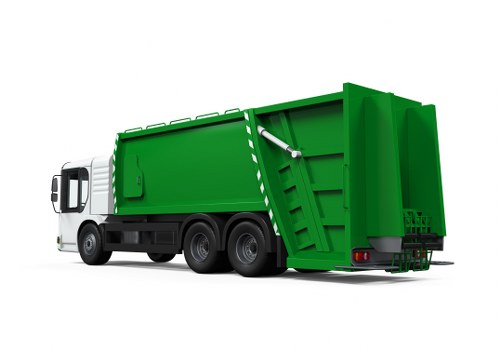
Operational controls extend to vehicles and equipment. Drivers follow standard checks before departure and after completion of routes; load restraint is verified and waste containers are maintained to prevent spillage. Specialist equipment such as tail lifts, compactors and hydraulic arms are inspected and locked-out for maintenance. Permit-to-work systems are used for higher-risk activities.
 Contractor and supplier management requires written evidence of competency, insurance and safety systems. Contracts include safety obligations and audit rights. Where third parties access operational areas they are supervised and given site-specific safety information. Recordkeeping includes training logs, vehicle maintenance records, risk assessments and incident reports to support transparency and continuous improvement.
 Accountability and continuous improvement: senior management reviews health and safety performance at planned intervals. We set measurable objectives for reducing incidents, improving training completion rates and enhancing waste segregation performance. Internal audits and independent inspections are used to validate compliance. Findings are used to update the policy and operational procedures.
Enforcement and review: non-compliance with this policy may result in disciplinary measures or removal of site access for contractors. We encourage open reporting and constructive action to improve safety without fear of reprisal where incidents are reported in good faith. This policy is reviewed at least annually or sooner when operational changes, legislative updates or significant incidents warrant revision.
Commitment: Commercial Waste Coney Hall is committed to protecting the health and safety of its workforce and the communities we serve by delivering safe, reliable and environmentally responsible commercial waste services. All employees, contractors and stakeholders are expected to support the policy and contribute to a culture of safety and professionalism.
Signed on behalf of management: (Policy approved and dated internally). The policy and associated procedures are maintained as controlled documents and are made available to all relevant personnel. Regular briefings will ensure that everyone understands their role in maintaining a safe rubbish collection and waste management operation.
